Yom HaAtzmaut
Many Jewish communities in Australia celebrate Yom Ha’Atzmaut, which is Israel’s Independence Day, on the fifth day of the month of Iyar in the Jewish calendar.

National Sorry Day is an Australia-wide observance held on May 26 each year. This day gives people the chance to come together and share the steps towards healing for the Stolen Generations, their families and communities. Stolen generations refer to Indigenous Australians who were forcibly removed from their families and communities.
National Sorry Day is not a public holiday. It falls on Sunday, May 26, 2024 and most businesses follow regular Sunday opening hours in Australia.
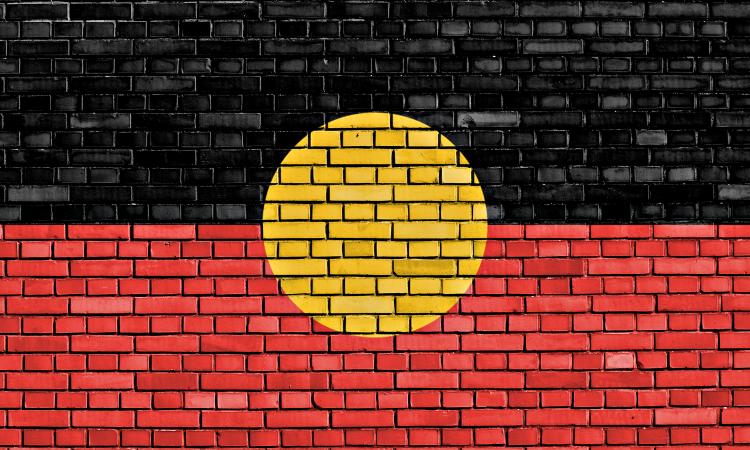
The Aboriginal flag is one of the symbols of National Sorry Day in Australia.
©bigstockphoto.com/ budastock
Various National Sorry Day activities and events take place throughout Australia on National Sorry Day. They include:
National Sorry Day also gives people the chance to write messages and sign “sorry books” as a way of showing their commitment towards reconciliation. They pledge their support towards fulfilling the recommendations from the Bringing Them Home report. Thousands of Australians have already shown their support by writing messages and signing “sorry books” since 1998.
Many school children take part in National Sorry Day activities, which include essay competitions, lighting candles for Indigenous Australians who were taken away from their families and communities, and inviting local Indigenous Australian elders to speak with students. Films that focus on the Stolen Generations may also be shown to students for discussion.
National Sorry Day is not a federal public holiday in Australia. However, traffic and parking may be affected in areas where there are reconciliation walks or street marches.
The first National Sorry Day was held on May 26, 1998, which was one year after the tabling of a report about the removal of Aboriginal and Torres Strait Islander children from their families. The report, known as Bringing Them Home, acknowledged that Indigenous children were forcibly separated from their families and communities since the early days of European occupation in Australia. Governments and missionaries were responsible for this forced separation.
Systematic removal practices were implemented through various assimilation and “protection” policies by the late 19th century. Many Indigenous children were forcibly taken away from their families in the name of assimilation during the 1950s and 1960s. These children are known as the “Stolen Generations”. They were brought up in institutions or fostered to non-Indigenous families. This removal was official government policy in Australia until 1969.
By the 1980s, by welfare and community groups spoke out that governments' social welfare practices were discriminatory against Indigenous people. This forced a reappraisal of removal and placement practice during the 1980s. In 1980 the family tracing and reunion agency Link-Up (NSW) Aboriginal Corporation was established. Similar services now exist throughout Australia.
Australia’s Prime Minister Kevin Rudd tabled a motion in parliament on February 13, 2008, apologizing to Australia’s Indigenous people, particularly the Stolen Generations and their families and communities, for the laws and policies that inflicted profound grief, suffering and loss. The apology included a proposal for a policy commission to close the gap between Indigenous and non-Indigenous Australians in matters such as life expectancy, educational achievement, and economic opportunity. This event is seen by many as a step forward in reconciliation.
The Aboriginal flag and the Torres Strait Islander flag are often seen on National Sorry Day. The Aboriginal flag is horizontally divided into two equal halves of black (top) and red (bottom) with a yellow circle in the centre. The black symbolizes Australia’s Aboriginal people and the yellow circle represents the Sun. The red represents the Earth and people’s relationship with the land. It also represents ochre, which is used in Aboriginal ceremonies in Australia. Harold Joseph Thomas designed the flag, which was first flown at Victoria Square in Adelaide on July 12, 1971.
The Torres Strait Islander flag stands for Torres Strait Islanders’ unity and identity. It features three horizontal stripes, with green at the top and bottom of the flag and blue in between, divided by thin black lines. A white dharri or deri (a type of headdress) sits in the centre, with a five-point star underneath it. The color green represents the land. The dharri symbolizes all Torres Strait Islanders. The black represents the people and the blue represents the sea. The five-point star symbolizes the island groups. The star is white, which symbolizes peace in this case. Bernard Namok designed the flag.
| Year | Weekday | Date | Name | Holiday Type |
|---|---|---|---|---|
| 2019 | Sun | May 26 | National Sorry Day | Observance |
| 2020 | Tue | May 26 | National Sorry Day | Observance |
| 2021 | Wed | May 26 | National Sorry Day | Observance |
| 2022 | Thu | May 26 | National Sorry Day | Observance |
| 2023 | Fri | May 26 | National Sorry Day | Observance |
| 2024 | Sun | May 26 | National Sorry Day | Observance |
| 2025 | Mon | May 26 | National Sorry Day | Observance |
| 2026 | Tue | May 26 | National Sorry Day | Observance |
| 2027 | Wed | May 26 | National Sorry Day | Observance |
| 2028 | Fri | May 26 | National Sorry Day | Observance |
| 2029 | Sat | May 26 | National Sorry Day | Observance |
While we diligently research and update our holiday dates, some of the information in the table above may be preliminary. If you find an error, please let us know.
Many Jewish communities in Australia celebrate Yom Ha’Atzmaut, which is Israel’s Independence Day, on the fifth day of the month of Iyar in the Jewish calendar.
Many Christians in Australia observe Pentecost, also known as Whitsunday or Whit Sunday.
Whit Monday is a Christian observance also known as Pentecost Monday. It is the day after Pentecost, or Whitsunday.
Many churches in Australia observe Trinity Sunday, a Christian feast that occurs on the first Sunday after Pentecost.