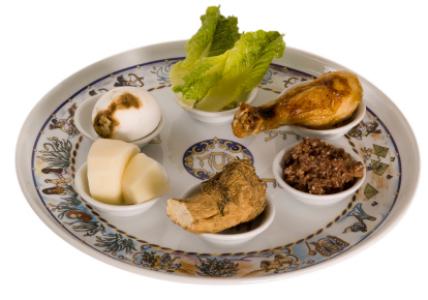
Last day of Passover
The last day of Passover marks the end of the Passover period, which lasts for seven or eight days.

Orangemen's Day commemorates the Battle of the Boyne, which took place in 1690 outside Drogheda, now in the Republic of Ireland. It is a provincial holiday in Newfoundland and Labrador on the Monday closest to July 12.
Orangemen's Day is a public holiday in Newfoundland and Labrador, where it is a day off for the general population, and schools and most businesses are closed.
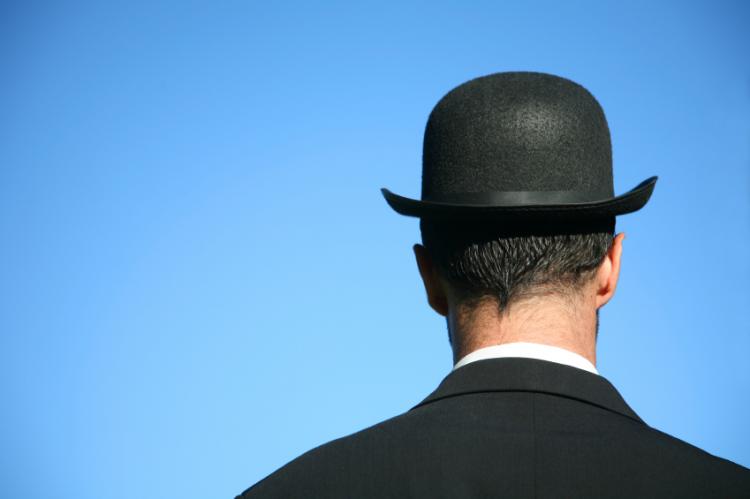
Geared up in a black suit and bowler hat for a march to remember the Battle of the Boyne.
©iStockphoto.com/bloodstone
Orangemen's Day is generally celebrated by people with a Protestant Irish or Scottish background, particularly those who support the Orange Order. In some areas of Newfoundland and Labrador and Ontario, particularly Toronto, parades are organized by Lodges of the Orange Order. During these parades, members of the lodges and their families march along a pre-arranged route carrying banners showing the name of the lodge and symbols associated with the Orange Order.
Marching bands often accompany the parades. After the parades, the lodges may organize family celebrations, known as “Times”, which include picnics, communal meals or dancing. Many parades are held on a Saturday close to July 12, but in areas where many people work in the cod fishing industry, Orangemen's Day events may be held during the winter.
The Monday closest to July 12 is a provincial holiday in Newfoundland and Labrador. Provincial offices and some businesses and organizations may be closed or offer a limited service but post offices and many stores are open and public transport services operate to their usual schedules. There may be some local disruption to traffic around parades. Orangemen's Day is not a public holiday in other parts of Canada.
The Battle of the Boyne in 1690 is seen as an important part of Ireland's history and pivotal in the power balance Protestants and Catholics in Great Britain and Ireland. Orangemen's Day is also celebrated in parts of the United Kingdom, especially in Northern Ireland.
By the end of the 19th century Orangemen's parades were commonplace in many Newfoundland communities. In the early days, Orangemen's Day was marked with large military parades, which lead to uneasy relationships between different religious groups and sectarian violence. Now Orangemen's Day celebrations are peaceful community celebrations suitable for all ages.
An important symbol of Orangemen's Day is the color orange, which represents the monarchs in the House of Orange in general and William of Orange in particular. This color is seen on collarettes, banners and many other items. During the parades, men usually wear white shirts and gloves under dark suits and orange collarettes. Collarettes are narrow bands of cloth draped around the neck and fastened in front to form a “V” shape on the wearer's chest. They are decorated with symbols that represent the lodge, to which the wearer belongs, and the positions he holds and the awards he has received.
The banners carried during the parades also represent Orangemen's Day and the events in history that inspired the celebrations. In Canada many Orangemen's Day parade banners have an orange or blue background and the name of the lodge they represent. Many include some of the following images:
Many banners may also feature the Union flag or Canada's national flag.
| Year | Weekday | Date | Name | Holiday Type | Area |
|---|---|---|---|---|---|
| 2019 | Mon | Jul 15 | Orangemen's Day | Local holiday | Newfoundland and Labrador |
| 2020 | Mon | Jul 13 | Orangemen's Day | Local holiday | Newfoundland and Labrador |
| 2021 | Mon | Jul 12 | Orangemen's Day | Local holiday | Newfoundland and Labrador |
| 2022 | Mon | Jul 11 | Orangemen's Day | Local holiday | Newfoundland and Labrador |
| 2023 | Mon | Jul 10 | Orangemen's Day | Local holiday | Newfoundland and Labrador |
| 2024 | Mon | Jul 15 | Orangemen's Day | Local holiday | Newfoundland and Labrador |
| 2025 | Mon | Jul 14 | Orangemen's Day | Local holiday | Newfoundland and Labrador |
| 2026 | Mon | Jul 13 | Orangemen's Day | Local holiday | Newfoundland and Labrador |
| 2027 | Mon | Jul 12 | Orangemen's Day | Local holiday | Newfoundland and Labrador |
| 2028 | Mon | Jul 10 | Orangemen's Day | Local holiday | Newfoundland and Labrador |
| 2029 | Mon | Jul 9 | Orangemen's Day | Local holiday | Newfoundland and Labrador |
While we diligently research and update our holiday dates, some of the information in the table above may be preliminary. If you find an error, please let us know.
The last day of Passover marks the end of the Passover period, which lasts for seven or eight days.
Many Orthodox Christians in Canada remember the events leading up to Jesus Christ's crucifixion on Great Friday.
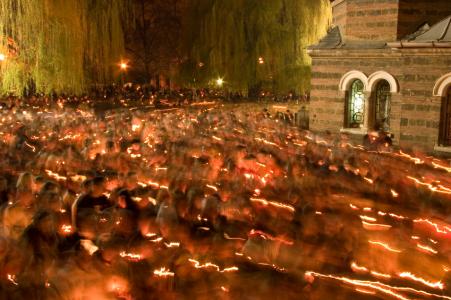
Many Orthodox Christians in Canada remember Jesus Christ’s burial and his descent into Hades on Holy Saturday.

Orthodox Christians in Canada celebrate Jesus Christ’s resurrection on Easter Sunday, also known as Pascha.