
Fathers' Day
Father’s Day celebrates fatherhood and male parenting on different dates worldwide.

Catholics and some Protestants in Germany honor the lives of every saint on All Saints' Day (Allerheiligen) on November 1. They also remember deceased relatives and visit their graves. This day is a public holiday in the states of Baden-Württemberg, Bayern, Rheinland-Pfalz, Nordrhein-Westfalen and Saarland.
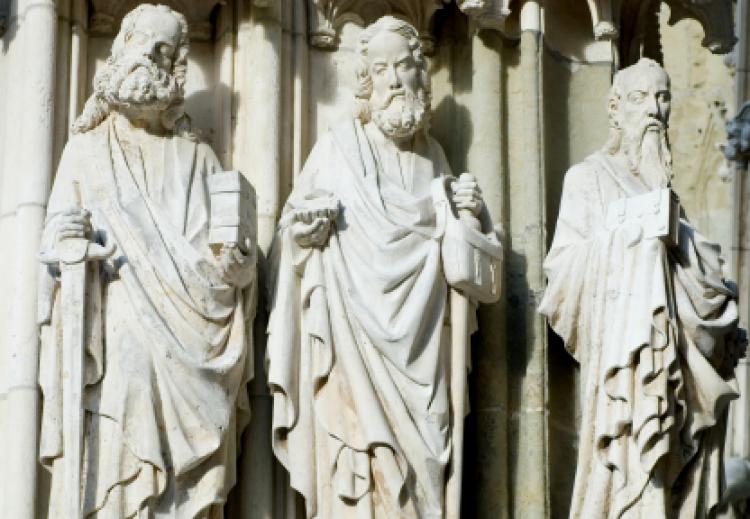
All Saints' Day in Germany is dedicated to the Christian saints.
©iStockphoto.com/Mary Lane
Traditionally, Catholics attend a special church service, light candles and pray for deceased relatives. They may also visit the graves of deceased relatives and family friends. In Catholic areas, many graveyards are decorated with flowers and candles are lit as soon as it starts to get dark in the late afternoon. On November 1 or the closest Sunday, Protestants may also visit a special church service or pray for deceased relatives.
All Saints' Day is a public holiday in Baden-Württemberg, Bayern, Rheinland-Pfalz, Nordrhein-Westfalen and Saarland. In these states, post offices, banks, stores and other businesses are closed. However, stores in some tourist areas may be open and stores at railway stations, airports and along highways are usually open.
Public transport services may be regular, reduced or have no service depending on where one lives and wants to travel. All Saints' Day is not a public holiday in other parts of Germany.
Some sources say that All Saints' Day's origins date back to 609 CE or 610 CE, when the Pantheon in Rome was consecrated to the Blessed Virgin and all martyrs. This coincided with the pre-Christian Feast of the Lemures that honored all of the dead. However, other sources have different dates.
All Saints' Day is represented by paintings and images of many saints together. The saints may surround or look towards a figure representing Jesus and be accompanied by angels. Saints are often represented with a golden halo above or behind their heads.
In some areas of Germany, a Newweling symbolizes All Saints' Day. A Newweling is made of two or more candle wicks dipped in wax and wrapped around a cone shaped form. The form is removed before the candle is lit. Traditionally, each candle wick is dipped in red, white, blue, yellow or green wax and two or more different colors are used for each candle.
| Year | Weekday | Date | Name | Holiday Type | Area |
|---|---|---|---|---|---|
| 2019 | Fri | Nov 1 | All Saints' Day | Silent Day, public holiday | BW, BY, NRW, RLP, SL |
| 2019 | Fri | Nov 1 | All Saints' Day | Observance, Christian | HB, NDS*, SN, TH |
| 2020 | Sun | Nov 1 | All Saints' Day | Observance, Christian | HB, NDS*, SN, TH |
| 2020 | Sun | Nov 1 | All Saints' Day | Silent Day, public holiday | BW, BY, NRW, RLP, SL |
| 2021 | Mon | Nov 1 | All Saints' Day | Silent Day, public holiday | BW, BY, NRW, RLP, SL |
| 2021 | Mon | Nov 1 | All Saints' Day | Observance, Christian | HB, NDS*, SN, TH |
| 2022 | Tue | Nov 1 | All Saints' Day | Silent Day, public holiday | BW, BY, NRW, RLP, SL |
| 2022 | Tue | Nov 1 | All Saints' Day | Observance, Christian | HB, NDS*, SN, TH |
| 2023 | Wed | Nov 1 | All Saints' Day | Silent Day, public holiday | BW, BY, NRW, RLP, SL |
| 2023 | Wed | Nov 1 | All Saints' Day | Observance, Christian | HB, NDS*, SN, TH |
| 2024 | Fri | Nov 1 | All Saints' Day | Observance, Christian | HB, NDS*, SN, TH |
| 2024 | Fri | Nov 1 | All Saints' Day | Silent Day, public holiday | BW, BY, NRW, RLP, SL |
| 2025 | Sat | Nov 1 | All Saints' Day | Observance, Christian | HB, NDS*, SN, TH |
| 2025 | Sat | Nov 1 | All Saints' Day | Silent Day, public holiday | BW, BY, NRW, RLP, SL |
| 2026 | Sun | Nov 1 | All Saints' Day | Silent Day, public holiday | BW, BY, NRW, RLP, SL |
| 2026 | Sun | Nov 1 | All Saints' Day | Observance, Christian | HB, NDS*, SN, TH |
| 2027 | Mon | Nov 1 | All Saints' Day | Observance, Christian | HB, NDS*, SN, TH |
| 2027 | Mon | Nov 1 | All Saints' Day | Silent Day, public holiday | BW, BY, NRW, RLP, SL |
| 2028 | Wed | Nov 1 | All Saints' Day | Silent Day, public holiday | BW, BY, NRW, RLP, SL |
| 2028 | Wed | Nov 1 | All Saints' Day | Observance, Christian | HB, NDS*, SN, TH |
| 2029 | Thu | Nov 1 | All Saints' Day | Observance, Christian | HB, NDS*, SN, TH |
| 2029 | Thu | Nov 1 | All Saints' Day | Silent Day, public holiday | BW, BY, NRW, RLP, SL |
| * Observed in some communities of Lower Saxony only. | |||||
While we diligently research and update our holiday dates, some of the information in the table above may be preliminary. If you find an error, please let us know.
Father’s Day celebrates fatherhood and male parenting on different dates worldwide.
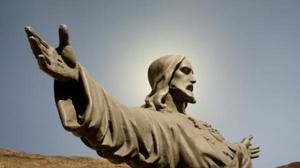
Ascension Day in Germany is on a Thursday 39 days after Easter Sunday.

Mother’s Day celebrates the achievements and efforts of mothers and mother figures.
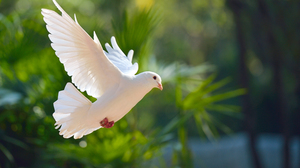
Pentecost is a Christian holiday to remember the Holy Spirit's descent onto Jesus' followers.