
The Summer Solstice Impact
The longest day of the year can bring energy—or anxiety. Here's how the abundance of daylight around the summer solstice can affect your brain and body.

St. Stephen's Day (Lá Fhéile Stiofáin), or the Day of the Wren (Lá an Dreoilín), is an occasion to commemorate the life of St Stephen, a Christian martyr. Many people spend the day quietly with close friends or family.
St. Stephen's Day is a public holiday. It is a day off for the general population, and schools and most businesses are closed.
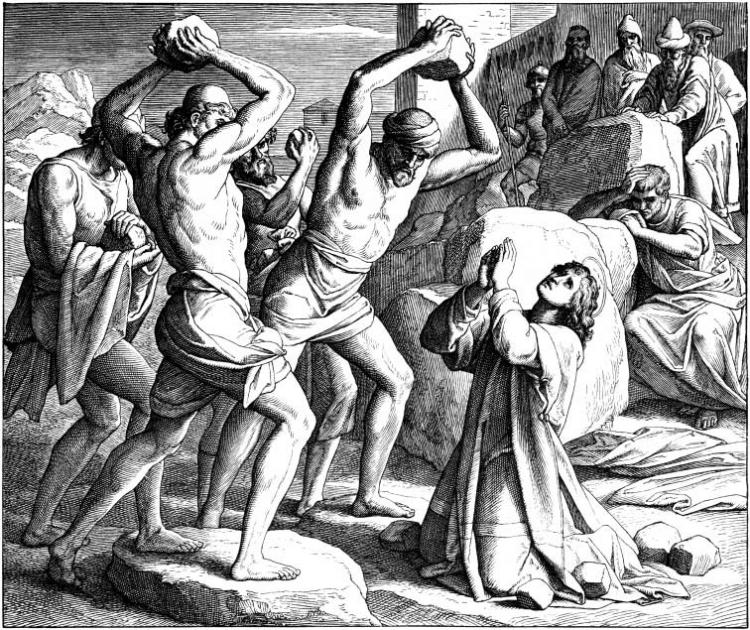
St Stephen was an early Christian martyr who is remembered on December 26.
©iStockphoto.com/ivan-96
Many people generally spend the day quietly with family members or close friends. Some Christians attend special church services to remember St Stephen's life. Other people may visit a theater to see a pantomime. Pantomimes are musical-comedy productions based on fairy tales and aimed at families. They incorporate audience participation, cross-dressing, double entendre and references to recent local events.
In some parts of Ireland, children go from door to door with a wren (a small bird) in a cage or a model wren on a stick. They may also sing, play music or perform traditional dances. In some areas, boys may dress as girls or women. Many hope to collect money for community or school projects or charity.
Banks, post offices and many other businesses and organizations are closed on St Stephen's Day. However, stores and pubs are generally open, although they may open later and close earlier than usual. Public transport service schedules vary depending on where one lives and intends to travel.
If a public holiday in Ireland falls on a Saturday or Sunday, many people get the following Monday off, although this is not guaranteed by law. Employers may also opt for alternative ways of compensating their workers, such as granting a paid day off within one month of the public holiday, an extra day of annual leave, or an additional day's pay.
St Stephen is believed to be the first Christian martyr. He was stoned to death sometime around the year 33 CE. According to an Irish legend, he was betrayed by a wren while hiding from his enemies. Another legend tells of Viking raids on Ireland on St Stephen's Day sometime around the year 750 CE. Irish soldiers were approaching a Viking camp to drive out the intruders. However, a wren started eating crumbs from a drum and alerted the Vikings to the presence of the Irish soldiers.
Hence, some people felt that wrens betrayed them and should be stoned to death, just as St Stephen was. Boys traditionally hunted a wren and threw stones at it. They tied it to a stick when it was dead and paraded it around the village. They did this to collect money for a dance or party for the whole village. Although the custom of killing wrens on December 26 died out around 1900, St Stephen's Day is still known as the Day of the Wren, particularly in rural areas.
St Stephen's Day has been a holiday in Ireland for hundreds of years. It became a public holiday following the Bank Holidays Act 1871.
The wren and images of St Stephen are important symbols of St Stephen’s Day in Ireland.
| Year | Weekday | Date | Name | Holiday Type |
|---|---|---|---|---|
| 2020 | Sat | Dec 26 | St. Stephen's Day | National Holiday |
| 2021 | Sun | Dec 26 | St. Stephen's Day | National Holiday |
| 2022 | Mon | Dec 26 | St. Stephen's Day | National Holiday |
| 2023 | Tue | Dec 26 | St. Stephen's Day | National Holiday |
| 2024 | Thu | Dec 26 | St. Stephen's Day | National Holiday |
| 2025 | Fri | Dec 26 | St. Stephen's Day | National Holiday |
| 2026 | Sat | Dec 26 | St. Stephen's Day | National Holiday |
| 2027 | Sun | Dec 26 | St. Stephen's Day | National Holiday |
| 2028 | Tue | Dec 26 | St. Stephen's Day | National Holiday |
| 2029 | Wed | Dec 26 | St. Stephen's Day | National Holiday |
| 2030 | Thu | Dec 26 | St. Stephen's Day | National Holiday |
While we diligently research and update our holiday dates, some of the information in the table above may be preliminary. If you find an error, please let us know.
The longest day of the year can bring energy—or anxiety. Here's how the abundance of daylight around the summer solstice can affect your brain and body.
What’s up in the day and night sky in June 2025: A bright morning Venus, two Moon-Mars conjunctions, and the solstice changing the seasons.

Since 2020, Earth has notched up unprecedentedly short days midway through the year. It will happen again in 2025.
Discover the phases of the Moon in June 2025, including close approaches with Mars and Venus.