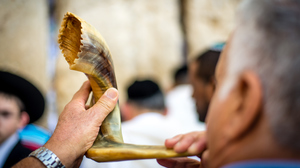
Rosh Hashana
Rosh Hashanah is the Jewish New Year. Many Jewish-run organizations in the US are closed during the two-day celebration.

Considered the end of the “Days of Judgment,” Hoshana Rabbah marks the completion of Sukkot and features a special ceremony with willow branches.
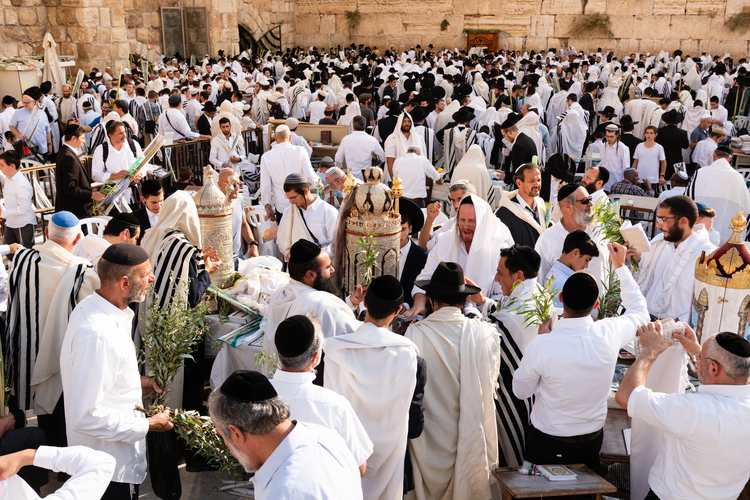
Worshippers circle the holy scriptures seven times before striking the ground with willow branches.
© iStockphoto.com/olala23
While this is not a public holiday in the United States, some Jewish-run organizations are closed on this date.
Hoshana Rabbah is celebrated on the 21st day of the month of Tishrei in the Hebrew calendar, which usually falls in October in the Gregorian calendar.
During Hoshana Rabbah services, the Torah scrolls are taken out of the Ark and held above the temple´s bimah or Torah reading table. The congregation then makes a procession of seven circuits around the bimah while reciting special Hoshaanot prayers.
Traditionally, each worshiper holds a lulav and etrog, or bundle of branches from date palm, myrtle, willow, and citron trees during this procession.
At the conclusion of the circuits, a bundle of five willow branches is beaten on the earth five times to symbolize the elimination of sin and as a prayer for good rainfall and bountiful crops in the coming year.
Afterward, a festive meal is often served in a sukkah, an outdoor shelter specially built for the Sukkot holiday. Bread and honey are often served, along with triangular kreplach dumplings filled with ground beef or chicken.
Hoshana Rabbah is thought of as the end of a period known as the Days of Judgment that begins on Rosh Hashanah, continues through Yom Kippur, and ends on the last day of Sukkot.
Some ancient scholars held that divine judgment for the coming year is decided on Yom Kippur, but not delivered until the day of Hoshana Rabbah. So the belief is that there is still a chance to influence the final verdict on one's fate up until this time.
Jews often greet each other with a special blessing on this holiday using the Aramaic “pitka tava,” or Yiddish "a guten kvitel,” both translating as a hope that the divine verdict will be positive.
There are some small variations in traditions for Hoshana Rabbah. Sephardic Jewish communities include prayers for forgiveness known as selichot before services, and some congregations include shofar or ram´s horn soundings with the processions.
In the Jewish diaspora—Jewish communities outside of Israel—an extra day is usually added to religious observances, with the exception of Yom Kippur, which lasts only one day worldwide, and Rosh Hashana, which is celebrated over two days in both Israel and the diaspora.
This custom has its roots in ancient times when the beginning of the months in the Jewish calendar still relied on the sighting of the crescent Moon following a New Moon.
The beginning of a new month was determined by the Sanhedrin, the supreme court of ancient Israel in Jerusalem. Once the date was published, messengers were dispatched to spread the news among Jews living abroad. Since this process took some time, it was decreed that Jews outside of ancient Israel were to observe every holiday for two days to make sure the rules and customs applicable to each holiday were observed on the proper date. This rule is still observed today.
Note: Jewish holidays begin at sundown the day before the date specified for the holiday.
| Year | Weekday | Date | Name | Holiday Type |
|---|---|---|---|---|
| 2019 | Sun | Oct 20 | Last Day of Sukkot | Jewish holiday |
| 2020 | Fri | Oct 9 | Last Day of Sukkot | Jewish holiday |
| 2021 | Mon | Sep 27 | Last Day of Sukkot | Jewish holiday |
| 2022 | Sun | Oct 16 | Last Day of Sukkot | Jewish holiday |
| 2023 | Fri | Oct 6 | Last Day of Sukkot | Jewish holiday |
| 2024 | Wed | Oct 23 | Last Day of Sukkot | Jewish holiday |
| 2025 | Mon | Oct 13 | Last Day of Sukkot | Jewish holiday |
| 2026 | Fri | Oct 2 | Last Day of Sukkot | Jewish holiday |
| 2027 | Fri | Oct 22 | Last Day of Sukkot | Jewish holiday |
| 2028 | Wed | Oct 11 | Last Day of Sukkot | Jewish holiday |
| 2029 | Sun | Sep 30 | Last Day of Sukkot | Jewish holiday |
While we diligently research and update our holiday dates, some of the information in the table above may be preliminary. If you find an error, please let us know.
Rosh Hashanah is the Jewish New Year. Many Jewish-run organizations in the US are closed during the two-day celebration.
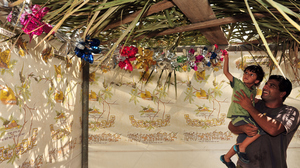
The first day of Sukkot marks the start of the Sukkot festival for Jewish communities in many countries, including the United States.
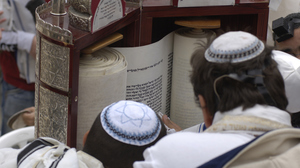
Shemini Atzeret (or Shmini Atzeret) is a Jewish holiday dedicated to the love of God, while Simchat Torah (Simchas Torah or Simhat Torah) marks the end of Sukkot and celebrates the completion of the annual reading of the Torah.
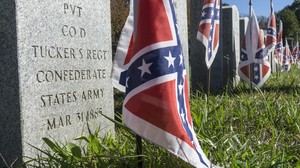
On Confederate Memorial Day remembers the soldiers who died fighting for the Confederate States of America during the American Civil War (1861-1865). It is a state holiday in some parts of the United States.